Bedway Geometry & Iron Mass
Verify whether the bed uses ground V-ways or flat prism sections, and confirm overall net machine weight. Adequate bed mass dampens resonance during parting and interrupted cuts in tough alloys.
Model engineering demands exact kinematic clearances. We examine manufacturer-documented bed swings, spindle bores, and drive controllers so you can assess machine limits before committing workshop space.

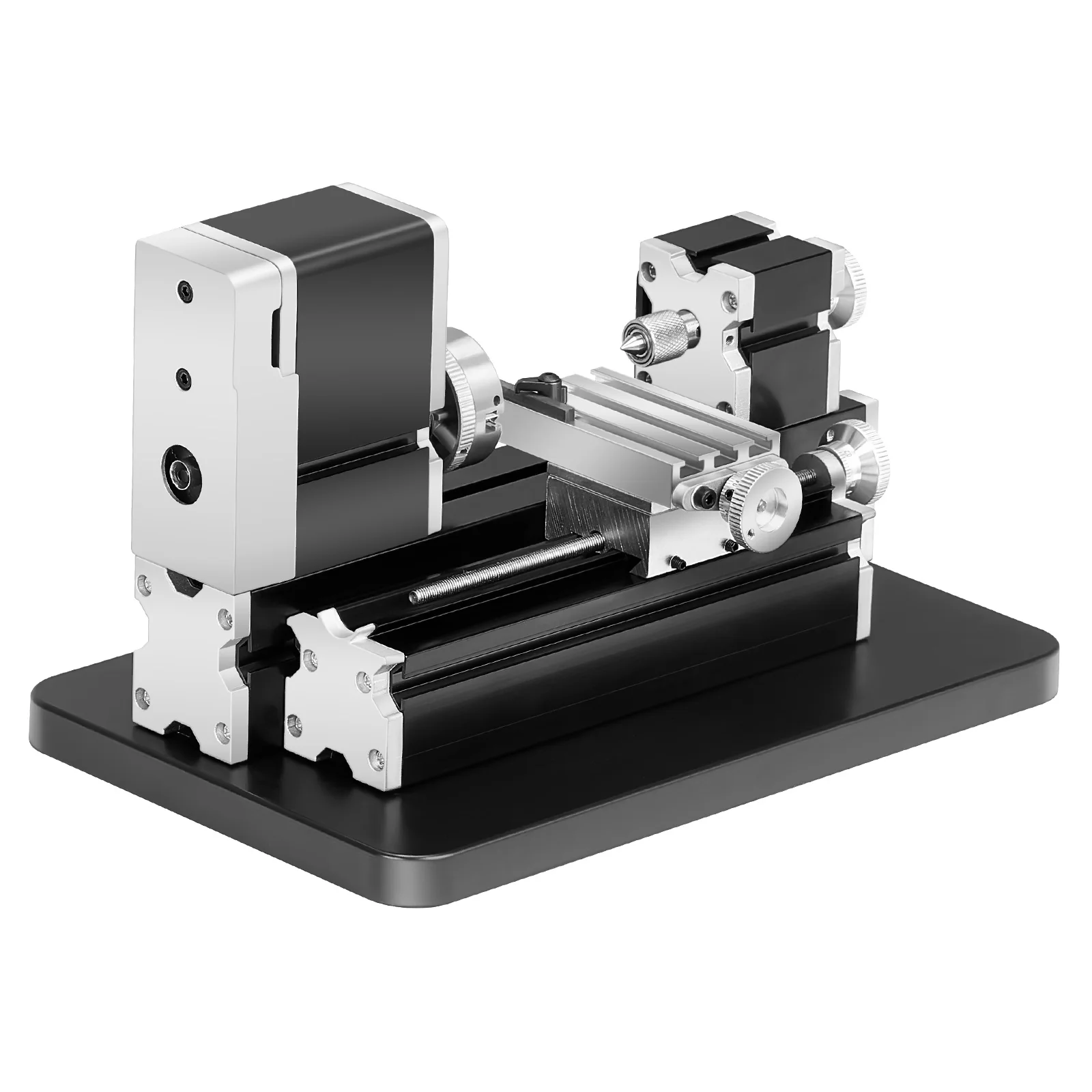
Look past vendor horsepower marketing. Compare published physical parameters that dictate structural rigidity and tool compatibility.
Verify whether the bed uses ground V-ways or flat prism sections, and confirm overall net machine weight. Adequate bed mass dampens resonance during parting and interrupted cuts in tough alloys.
Examine the spindle internal taper (typically Morse Taper 3) and through-bore dimension. A larger bore allows longer stock feed through the headstock without auxiliary steady rests.
Identify whether the machine supplies nylon or steel gear trains, and check native lead screw threading pitches for both metric and imperial screw-cutting compatibility.
Compare benchtop 550W metal lathes and 36W micro craft units by stated specs, tooling needs, and workshop project requirements.
Evaluate budget 36W micro metal lathes under $150, comparing claimed motor specs, envelope dimensions, and tooling needs for small DIY projects.
Technical Guide • Benchtop Machining Series Typical Bed Swing: 180 mm (7.09 in) Spindle Bore Range: 20 mm (0.79 in) Spindle / Quill Tapers: MT3 / MT2 Chassis
Assess generic chassis classifications common to imported model maker lathes to understand realistic workspace envelopes.
Standard chassis common to Sieg and Real Bull OEM builds. Designed for clockmaking, small fittings, and model parts where bench footprint is tightly constrained.
Step-up casting offering wider bed ways, enlarged headstock bearings, and higher-capacity cross-slides suitable for general model engineering and small shaft turning.
Extended bed format featuring dedicated feed rods, separate lead screws for thread-cutting, and heavier apron mechanisms for heavier material removal rates.
This site contains affiliate links. We may earn a commission at no extra cost to you.